Matrimony for Visually Impaired / Blind Persons in India
A meaningful relationship begins with understanding, affection and mutual respect. For blind and visually impaired persons, finding a life partner involves the same important questions anyone may ask: Do we share similar values? Can we communicate openly? What future do we want to build together?
A thoughtful marriage search gives these questions attention while making introductions and communication accessible to the individual.
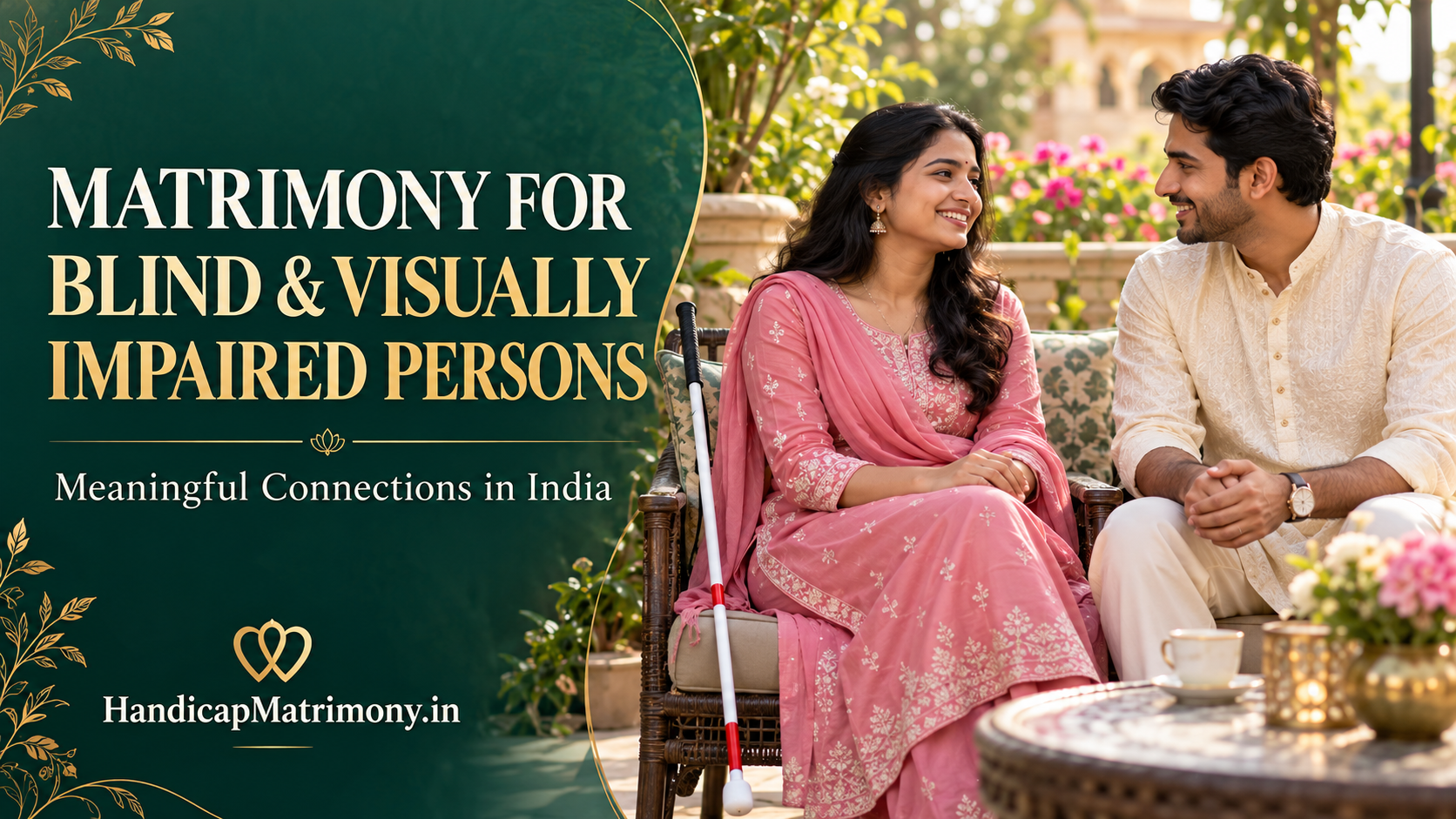
Exploring HandicapMatrimony.in
HandicapMatrimony.in describes itself as a private, dignity-first matchmaking service backed by Nandiyam Group. Its stated focus includes individuals with disabilities and chronic health conditions. handicapmatrimony.in
Blind and visually impaired individuals considering the service can enquire about eligibility, current membership options and support for their preferred way of communicating. Confirm specific accessibility arrangements directly before joining.
Compatibility Begins with the Whole Person
A matrimonial profile should introduce your personality, education, profession, interests and aspirations.
Blindness or visual impairment does not tell someone what kind of partner you will be. Conversations should explore emotional expectations, lifestyle, career plans and family relationships.
You may prefer a partner who is blind, has low vision or is sighted. That choice is personal. Shared disability experiences alone do not establish compatibility.
Make Profile Sharing Accessible
Ask for profile information in a format you can comfortably review. Depending on your preferences, this might include screen-reader-friendly text, accessible digital documents, larger text or an audio introduction.
Important information should be available beyond photographs or image-only biodata. If someone helps review profiles, agree on what assistance you want and keep decisions in your own hands.
Plan Comfortable First Introductions
Choose a communication format that suits both people, such as a phone call, accessible messaging or an in-person conversation.
For a meeting, discuss the location and any useful arrangements in advance. Clear directions, a convenient meeting point and a quieter setting may help.
Speak directly to your prospective partner. Ask before offering physical assistance, and respect their preferred way of navigating the space.
Discuss Everyday Life Openly
As mutual interest develops, talk about the practical details of a shared future:
- Preferred city and living arrangements.
- Career ambitions and relocation.
- Household responsibilities and finances.
- Travel routines and accessibility preferences.
- Family involvement and personal boundaries.
Avoid assumptions about independence or support needs. Each person should explain what works for them and what they expect from a relationship.
Protect Privacy and Personal Choice
Before sharing photographs, contact details or sensitive documents, understand who will receive them and why.
Ask the matchmaking service which profile details have been checked and which remain self-declared. Review membership fees, duration, included assistance and applicable cancellation terms before paying.
Family members can support the search when welcomed, but both prospective partners should have time to communicate and decide freely.
Begin with a Conversation
For those exploring specialised matchmaking, HandicapMatrimony.in offers a starting point for enquiring about its approach and available services.
Share your partner preferences, communication requirements and expectations clearly. The aim is an introduction that allows two people to discover shared interests, mutual respect and the possibility of a fulfilling life together.
Handicap Matrimony
Dignity • Choice • Companionship