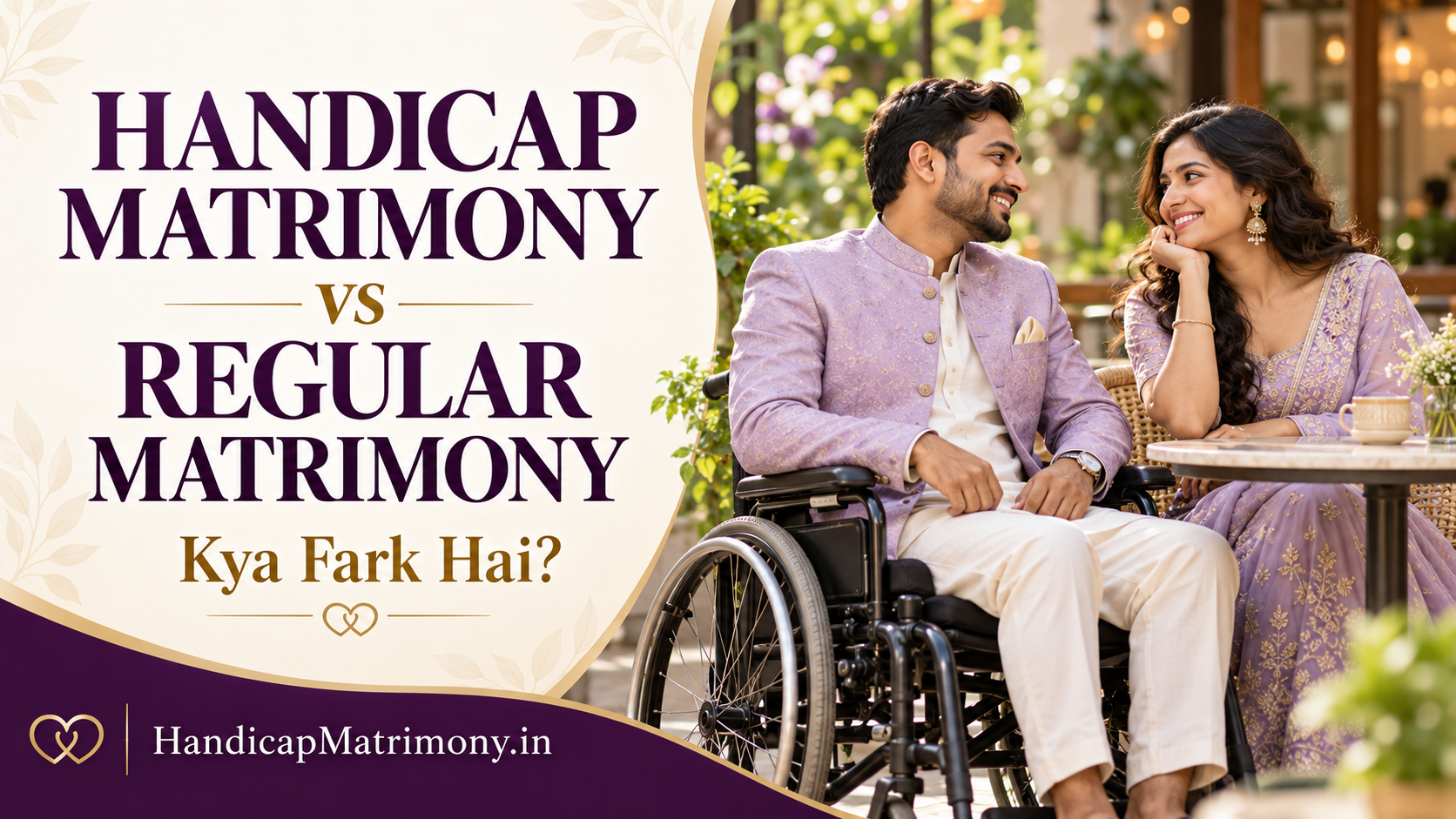
Handicap Matrimony vs Regular Matrimony Sites: What’s the Difference?
Finding a life partner involves shared values, emotional understanding and respect. For persons with disabilities, the search may also include practical discussions about accessibility, communication preferences and daily routines.
Both disability-focused services and mainstream matrimony websites can provide opportunities to meet a compatible partner. The right choice depends on your preferences and the support available.
What Is Handicap Matrimony?
Disability-focused matrimony gives particular attention to the marriage-search requirements of persons with disabilities.
HandicapMatrimony.in describes itself as a private, dignity-first matchmaking service backed by Nandiyam Group, with a focus that includes individuals with disabilities and chronic health conditions. handicapmatrimony.in
A specialised consultation can be an opportunity to discuss relationship expectations alongside accessibility and privacy requirements. Confirm the current services and membership details directly before joining.
What Are Regular Matrimony Sites?
Regular, or mainstream, matrimony sites serve a broad audience. Depending on the platform, members may browse profiles independently or choose assisted matchmaking.
Persons with disabilities can use these platforms too. Their suitability depends on the available features, accessibility and support.
Key Differences at a Glance
1. Matchmaking Focus
Specialised services focus on disability-related matchmaking requirements. Mainstream platforms serve people across a wider range of backgrounds.
2. Initial Conversations
Disability-focused services may include practical needs in the consultation from the beginning. On mainstream sites, members may need to raise these topics themselves.
3. Personal Support
Assistance varies in both categories. Ask who will support your search and what your membership includes.
4. Accessibility
Check whether registration, profile browsing and communication work comfortably for you. A specialised name alone does not guarantee accessible features.
5. Privacy and Verification
Both depend on the provider’s actual policies. Confirm who can view your details and what information has been verified.
Compatibility Goes Beyond Disability
A suitable match should reflect your personality, aspirations and expectations from married life.
Discuss career plans, location, family involvement, household responsibilities and any support preferences. Sharing the same disability does not automatically mean two people are compatible. Partners with different disability experiences—or without a disability—may also build a fulfilling relationship.
The individuals considering marriage should remain central to every decision.
How to Choose the Right Service
Before paying for membership, ask:
- What assistance and introductions are included?
- Can I control access to my photographs and contact details?
- Which profile details are checked?
- Are communication and meetings accessible to me?
- What are the fees, duration and cancellation terms?
Choose a service that explains its process clearly and respects your choices.
Explore HandicapMatrimony.in
If you prefer a specialised matchmaking approach, contact HandicapMatrimony.in to discuss your expectations and understand its current membership options.
Begin with the qualities you value in a partner and the future you hope to build. A meaningful relationship gives both people space to be heard, respected and appreciated.
Handicap Matrimony
Dignity • Choice • Companionship